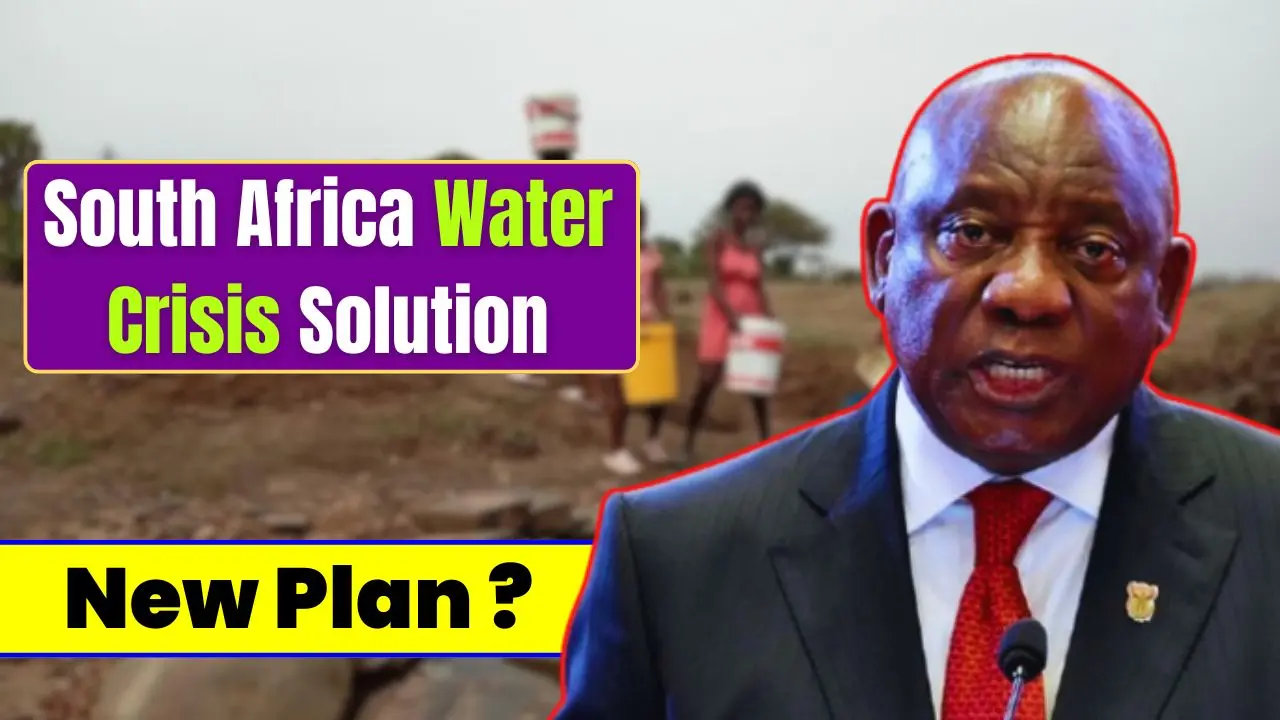
South Africa has struggled with an ongoing water crisis for many years, due to long-term droughts, climate change, dilapidated infrastructure, population growth, and sporadic rain patterns. The emergence of compromises in big urban cities like Cape Town, Johannesburg, and some parts of Eastern Cape warranted an urgent call for rigorous sustainable solutions. Scarcity of water now takes the topmost priority of all entire nation’s budgetary respects deprived of livelihoods for agriculture, industry, and economic planning.
Hence, involvement in the water infrastructure and maintenance of all facilities.
One central solution is investment in water infrastructure. A number of systems that are currently in operation leak, are inefficient, and are neglected resulting in tremendous water loss before it reaches the consumer. There is extensive action undertaken to rehabilitate pipelines, treatment plants and reservoirs to reduce wastage and improve the distribution. Consequently, maintenance of existing infrastructure with an initial focus to fix the old one and avoid losses.
Diversifying Water Sources
With the climate regime becoming unpredictable, dependence on traditional surface water resources is insufficient. South Africa must tap into desalinated water, groundwater mining, and water recycling so as to establish a wide range of water sources across the country. Large desalination plants along the coastlines can now convert seawater into drinking for those cities located near the shores. Boreholes and aquifer extraction at groundwater level can be used to furnish alternative supply solutions to communities in rural and peri-urban areas. Water recycling and reuse in agriculture, as well as industry, have resulted in a significant decline in freshwater-demand pressures.
Improvements in Management and Governance of Water
Water governance indeed represents a significant part of the overall solution. Having established this, authorities are genuinely working on improving inter-coordination between national and provincial and local bodies in an attempt to make policies effective. These improvements in the system help to regulate water use through monitoring, billing and imposing strict sanctions against violators who extract water unlawfully. The community educational campaign concerning water conservation has been mainly from the home water usage and minor-commercial-user perspectives.
Public Participation for Conservation
Public awareness on water conservation should go beyond “massive infrastructure projects” to promote the individual. Government and civil society organizations urge citizens to take certain hygiene measures, like plugging any leakage, preferably changing any appliances to water-saving models, and consuming low amounts of outdoor irrigation. Agencies have moved in to cultivate water as a precious resource among schools, businesses, and households to promote water conservation.
Assistance to Agriculture and Food Security
Drip irrigation, soil moisture sensors, and drought resistance modifications are used because agriculture is one of the biggest water users. They help farmers maintain productivity with far less water.
Conclusion
With the water crisis in South Africa becoming urgent, all-round, persistent intervention is required. If one is to take water into the zone of security and resiliency in South Africa, nurturing calls for investment in infrastructure, diversification of supply, strengthening governance, and promoting conservation.